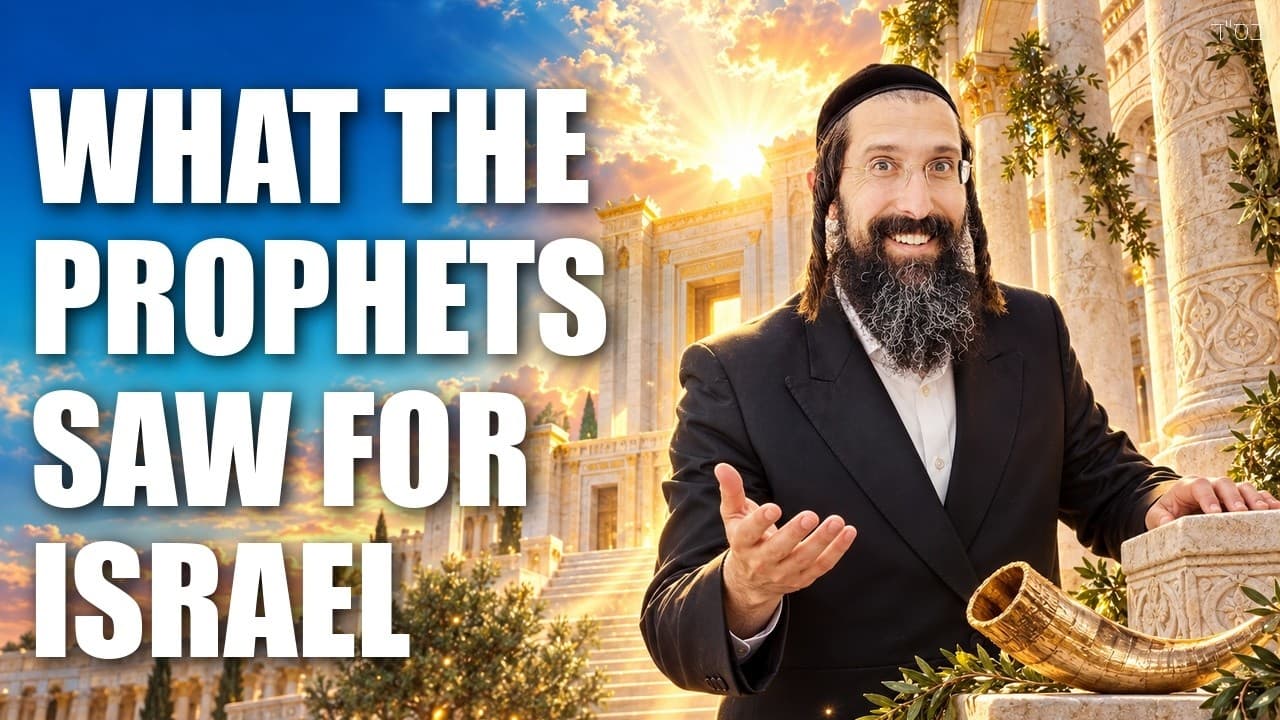
Shalom Aleichem Chevra, so good to have you here with us!
Did you know that a single verse in Deuteronomy — read correctly — unlocks the entire story of Jacob and Esau all the way through to the days of Mashiach?
In this shiur we dive deep into the ongoing saga of Jacob and Esau, tracing it from the desert wanderings in Deuteronomy all the way to the prophetic vision of Zechariah. We walk through Moshe's first-person retelling in Devarim, exploring why the Jewish people called Esau "brother" when asking to pass through Edom's land — and what Rashi says that word really meant. It's not sentimentality; it's a precise legal and historical argument rooted in the moment Esau walked away from his place within the Jewish people and headed off to build his life on Har Seir.
We then go line by line through one of the most stunning Rashis in the whole parsha, where the simple meaning of "you shall not place the sole of your foot" gets completely transformed by the Midrash. The word 'ad' — meaning 'until' — points us forward to Zechariah 14:4, where Hashem's presence stands on the Mount of Olives at the end of days. So that verse about Esau's land is secretly a prophecy about the final redemption. The whole boundary dispute between Jacob and Esau doesn't end in the desert. It runs through all of history until Mashiach arrives.
From there we move into the Gemara in Gittin, learning during the Nine Days about the beauty of the people of Zion described in Eichah. The Gemara asks what it means that the children of Zion were praised like 'paz' — that rare, luminescent gold — and tells us the real answer has nothing to do with jewelry. The Romans actually possessed most of that gemstone. The radiance of the people of Jerusalem came from their Torah and mitzvos, a spiritual light so intense it made even the rarest physical treasures look dark by comparison. We also look at some of the most difficult and painful passages of the Gemara describing what happened after the destruction, and why those children in captivity were asking each other where in the Torah their suffering was hinted at — and finding the answer in Deuteronomy 28:61.
If this shiur moved you even a little, share it with someone who needs it — and subscribe so you never miss the Chevra!
----------------------------------------------------------
🔹Join Rabbi Moshe Chaim's Exclusive Content
Sign up here 👉 https://www.youtube.com/@ChevraRavMosheChaim/join
🔹Join Rabbi Moshe Chaim's Private Chizzuk Group
Sign up here 👉 https://subscribepage.io/join-the-chevra
🔹Visit the Website 👉 https://www.ravmoshechaim.com/
🔹Newsletter 👉 https://ravmoshechaimchevra.substack.com/
🔹Discover Beautiful Sacred Art 👉 https://bit.ly/chevra-art
🔹Join us in Yeshiva - in Jerusalem! APPLY HERE👉 https://foundations.aish.com
----------------------------------------------------------
#Torah #Judaism #Spirituality #JewishHistory #Mashiach #JacobAndEsau #Eichah #NineDays #Devarim #Zechariah #RavMosheChaim #Chevra